Semarang, 5 August 2026 – The Department of Nutrition Science, Faculty of Medicine, Universitas Diponegoro, successfully organized an international Guest Lecture entitled “The Dietitian: Roles and Competence in the Management of NCDs” as part of the UNDIP Global Classroom (UGC) – World Class University (WCU) Program. The event served as an international academic forum to enrich participants’ understanding of the evolving role of dietitians in addressing the growing burden of non-communicable diseases (NCDs) through evidence-based nutrition care.
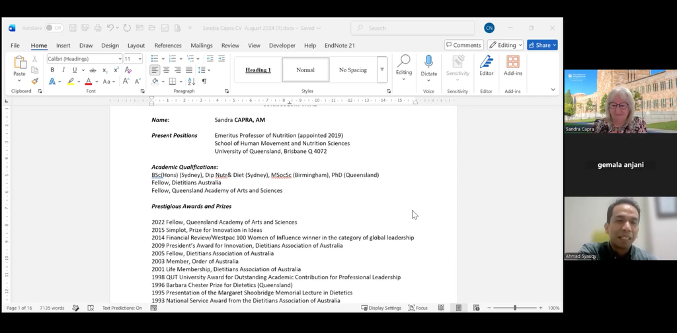
The guest lecture featured Prof. Sandra Capra AM, Ph.D., Emeritus Professor of Nutrition at The University of Queensland, Australia. As the former President of the International Confederation of Dietetic Associations (ICDA) and the Dietitians Association of Australia, Prof. Capra brought extensive international expertise and professional experience in the field of nutrition and dietetics.
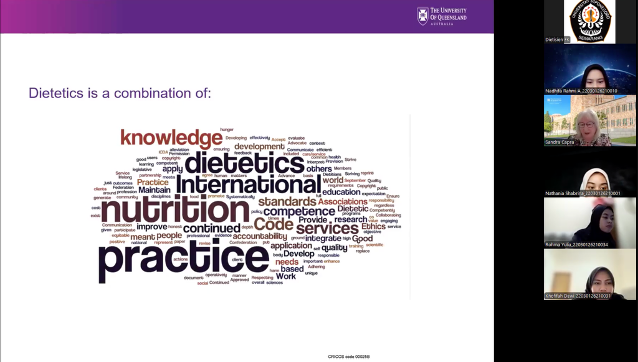
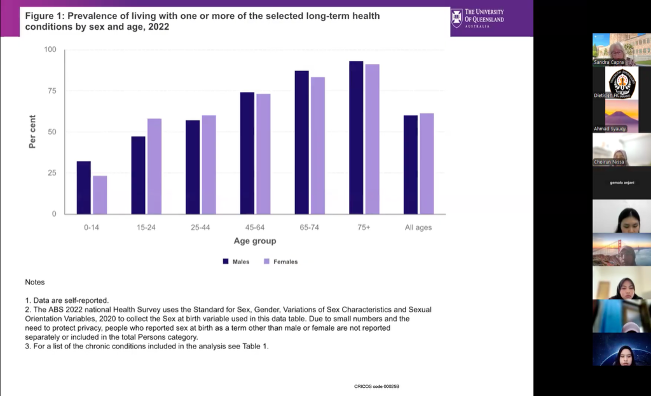
During her presentation, Prof. Capra highlighted the evolving role of dietitians in addressing the growing burden of non-communicable diseases (NCDs). Dietitian-nutritionists are not only responsible for providing nutrition care but also contribute to health promotion, disease prevention, chronic disease management, public health, food systems, sustainability, research, education, and community health. This role is increasingly important as chronic conditions affect more than 60% of Australians, with many individuals experiencing multiple chronic conditions. The lecture emphasized that dietitians can serve as knowledge translators, equity advocates, diet optimizers, and systems navigators by integrating nutrition science with the social, cultural, economic, and environmental realities of the populations they serve.
The lecture also emphasized that professional competence extends beyond theoretical knowledge to include practical skills, ethical practice, communication, collaboration, leadership, and effective nutrition care. The Nutrition Care Process involves screening, assessment, nutrition diagnosis, individualized intervention, implementation, and continuous monitoring and evaluation. Looking toward the future, dietitians need to demonstrate their value proposition by showing measurable outcomes and the benefits of nutrition services, while adapting to challenges such as climate change, changing food systems, advances in science, and personalized nutrition. The lecture encouraged future dietitians to strengthen their competencies, understand emerging trends, engage in research and practice-based evidence, and actively contribute to healthcare reform rather than simply responding to changes.